Professional Electric Oven and Cooktop Repairs in Upper Coomera
ISB Electrical provides professional oven and cooktop repairs in Upper Coomera for homeowners, families, tenants, landlords and property managers. We diagnose and repair electric wall ovens, fan-forced ovens, multifunction ovens, ceramic cooktops, induction cooktops and freestanding electric stoves.
Upper Coomera is a major residential area of the northern Gold Coast, with established neighbourhoods, family homes and newer housing developments around Reserve Road, Brygon Creek Drive, Days Road and surrounding streets. Kitchens throughout the suburb contain a range of electric cooking appliances, from conventional ceramic cooktops to modern multifunction ovens with electronic temperature controls.
When a cooking appliance stops heating, produces an error code or trips electrical protection, the problem may be limited to a replaceable component. We investigate the cause before recommending a repair or complete appliance replacement.
Local Electric Oven and Cooktop Fault Diagnosis
A malfunctioning electric oven can have more than one faulty component. For example, an oven may switch on and operate its circulation fan while a failed heating element prevents it from reaching the selected temperature. A defective thermostat may also affect the oven's ability to regulate heat.
Depending on the make and model, diagnostic work may involve testing heating element resistance and insulation, thermostat operation, temperature sensors, selector switches, fan motors, internal wiring, terminal connections and electronic control modules.
We explain the confirmed fault, assess the availability of compatible replacement parts and discuss the practical repair options.
Common Oven and Cooktop Problems in Upper Coomera
- Electric oven not heating
- Fan-forced heating element failure
- Oven thermostat not regulating temperature
- Oven heating slowly or unevenly
- Grill or lower bake element not working
- Circulation or cooling fan failure
- Oven digital timer or selector faults
- Oven tripping the RCD or RCBO
- Ceramic cooking zone not heating
- Large dual-zone element partly working
- Hotplate stuck on maximum heat
- Induction cooktop not starting
- Induction pan-detection problems
- One or two induction zones not heating
- Cooktop touch panel or display failure
- Damaged wiring or burnt connections
Real Smeg Oven Repair Completed in Upper Coomera
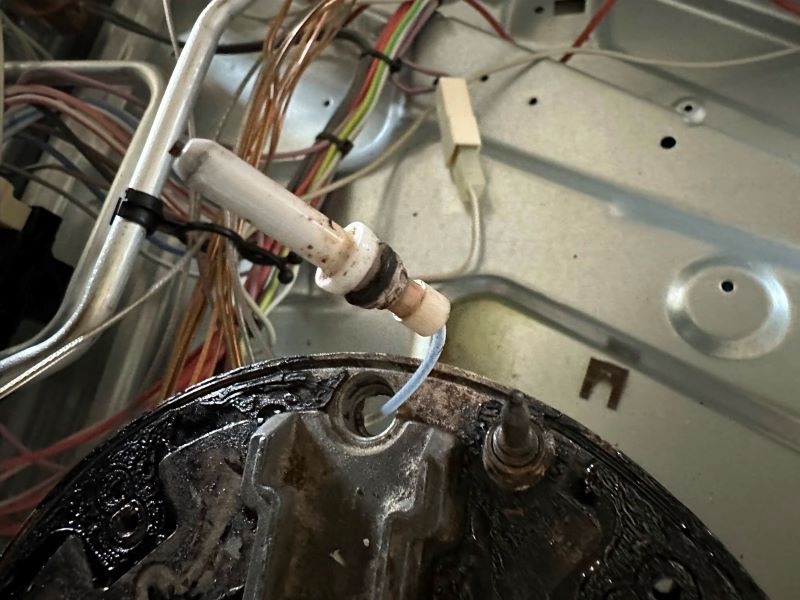
ISB Electrical attended a Smeg oven in Upper Coomera after the customer reported that it was switching on but not heating properly. The oven was not reaching the required cooking temperature, making normal food preparation difficult.
During the inspection, the oven's electrical supply, fan-forced heating circuit, thermostat, wiring connections and temperature response were investigated.
Two faults were confirmed: a failed fan-forced heating element and a defective thermostat. The element was not providing the required heat, while the thermostat was not controlling the cooking temperature properly.
Both components were replaced. Following the repair, the Smeg oven was tested to confirm correct heating operation and response to the selected temperature setting.
This completed Upper Coomera repair demonstrates the importance of checking both heat generation and temperature regulation, rather than assuming one faulty component explains every symptom.
Read the Full Smeg Oven Not Heating – Upper Coomera Repair
Electric Oven Not Heating in Upper Coomera
An electric oven may display the correct time, switch on its internal lamp and operate the circulation fan while failing to produce heat. These functions often use different circuits from the heating elements.
A defective fan-forced element, thermostat, selector switch, thermal cut-out, relay or internal electrical connection can interrupt normal heating.
By testing the heating components and controls, we can determine whether the oven requires an element, another replacement part or more extensive electrical repair.
Fan-Forced Oven Element Repairs
Many electric ovens contain a circular heating element around the rear circulation fan. During fan-forced cooking, this element heats the air distributed around the oven cavity.
If the element becomes open circuit, the fan may keep running without generating sufficient heat. Other functions, such as grilling, may still operate because they use separate elements.
A heating element can also develop insulation leakage to earth and cause an RCD or RCBO to trip. Testing is important to distinguish these failures and confirm the correct repair.
Oven Thermostat Replacement and Temperature Control
A faulty oven thermostat may cause overheating, slow cooking, incorrect preheating or difficulty maintaining the selected temperature. Older appliances may have mechanical thermostats, while newer ovens often rely on temperature sensors and electronic control boards.
In the Smeg oven repair completed in Upper Coomera, both the fan-forced heating element and thermostat required replacement. Changing only the element would not have addressed the confirmed temperature-control problem.
We assess heating operation and temperature regulation together, particularly where the appliance produces some heat but cannot cook at the selected setting.
Oven Heating on Grill but Not Fan-Forced
Multifunction ovens have different combinations of heating elements for grilling, conventional baking and fan-forced cooking. A fault affecting one mode may leave the other settings operating normally.
For example, a failed circular element or damaged selector contact can prevent fan-forced heating even when the grill works correctly.
We investigate individual operating modes and their associated switching circuits before recommending replacement components.
Oven Not Reaching the Selected Temperature
An oven that remains below the selected temperature may have insufficient heating power, incorrect temperature feedback or excessive heat loss.
Possible causes include a weak or failed element, defective thermostat, inaccurate sensor, circulation fan problem or damaged oven door seal.
We consider the appliance's heat-up behaviour, available cooking functions and physical condition when diagnosing temperature performance problems.
Oven Cooling Fan and Thermal Protection Problems
Some built-in electric ovens contain a separate cooling fan to remove heat from the control panel and surrounding cabinet area. This is different from the circulation fan inside the cooking cavity.
If the cooling system fails or airflow is restricted, excessive internal temperatures may activate a thermal cut-out or affect electronic controls in certain oven designs.
Thermal safety devices should not be bypassed. Their operation and any contributing temperature-control or ventilation problems should be investigated.
Oven Electronic Timer and Control Board Faults
Electronic ovens can have digital timers, function-control relays and temperature-regulation boards. Some appliances will not operate their heating functions after a power interruption until the clock is correctly reset.
Other problems may include a defective relay, display, timer module or internal power supply connection.
Because electronic control boards can be expensive, we investigate other possible faults before recommending their replacement.
Electric Oven Tripping the RCBO or RCD
An electric oven that repeatedly trips the electrical safety switch may have an insulation fault in one of its heating elements, damaged internal wiring, moisture or a defective electronic component.
In a documented Westinghouse oven investigation in nearby Coomera, ISB Electrical measured 0 ohms to earth on the fan-forced element. The defective element was identified as the cause of RCBO tripping, and replacement was recommended.
Some insulation faults occur immediately, while others appear after an element becomes hot. Electrical testing is required to identify the cause.
Stop using an oven that repeatedly trips electrical protection or produces signs of burning. Do not continue resetting the switch to force the appliance to run.
Ceramic Cooktop Repairs in Upper Coomera
Ceramic cooktops contain radiant heating elements beneath the glass cooking surface. One cooking zone can fail while the others continue operating because the zones use separate heating circuits.
A defective radiant element, simmerstat, energy regulator, relay or damaged electrical connection may prevent a zone from heating.
We test the affected circuit to distinguish a failed heating element from a control or connection problem.
Ceramic Hotplate Stuck on Maximum Heat
Some ceramic cooktops use mechanical energy regulators, commonly called simmerstats, to control the heating cycle. If the regulator fails, a hotplate may remain at full power regardless of the selected setting.
Other regulator faults can leave a zone cold or cause intermittent heating. Replacement of an individual controller may be possible when a suitable part is available.
An uncontrollable hotplate should not be used until it has been inspected.
Large and Dual-Zone Ceramic Heating Elements
Expandable ceramic cooking zones can use separate inner and outer heating circuits. If the smaller area operates but the larger ring remains cold, the problem may be in the element assembly or the circuit controlling its expansion.
We assess the heating circuits, regulators and switching connections to identify the affected part rather than automatically recommending replacement of the complete cooktop.
Induction Cooktop Repairs in Upper Coomera
Induction cooktops use electronic power circuits and induction coils to transfer energy into suitable cookware. These appliances also use temperature sensors, touch controls and, in many designs, cooling fans.
Symptoms include a cooking zone not detecting a saucepan, an error code, a blank display or a zone that switches off unexpectedly.
Some problems involve normal cookware-detection or overheating protection. Others indicate faults in electronic power modules, sensors, wiring or internal control circuits.
Induction Electronic Power Module Faults
Depending on the appliance design, two induction cooking zones may share a power module. A failure affecting both zones may involve a common electronic assembly or power-supply circuit.
When only one zone fails, the affected coil, sensor or control circuitry may require investigation.
Replacement modules can be costly, so the appliance model, fault code, affected zone pattern and availability of compatible parts should be considered before proceeding.
Induction Cooktop Overheating and Cooling Fans
Induction electronics generate heat during operation and often rely on adequate ventilation beneath the cooktop and internal cooling fans.
A cooktop that switches off after several minutes may be responding to normal overheating protection. Other possible causes include restricted airflow, a failed cooling fan, faulty temperature sensor or electronic power-circuit problem.
We investigate the conditions under which the problem occurs before recommending electronic components.
Touch-Control Cooktop Not Responding
Electronic cooktop touch panels may not respond because of moisture on the glass, a control lock, damaged internal connectors or a faulty touch-control board.
After excluding normal operating settings, further diagnosis may involve the control electronics, power supply and connections between the touch panel and heating modules.
Built-In Oven Repairs for Family Homes and Townhouses
Upper Coomera includes modern family houses, established residences and townhouse developments where built-in cooking appliances are fitted into kitchen cabinetry.
When a built-in oven fails, replacing the complete unit may involve matching cabinet dimensions and electrical installation requirements. Where the appliance is otherwise in reasonable condition, replacing a heating element, thermostat, switch or fan may be practical.
We consider the appliance's condition, diagnosed fault, parts availability and estimated repair costs before discussing replacement options.
Electric Oven and Cooktop Repairs for Rental Properties
ISB Electrical can assist landlords and property managers in Upper Coomera with diagnosis of faulty electric ovens and cooktops.
We explain the identified problem and whether an individual component can be repaired or replaced. Replacement parts and additional labour can be quoted separately before work is authorised.
This helps property owners compare the likely repair cost with the alternative of replacing the cooking appliance.
Oven, Stove and Cooktop Brands We Repair
ISB Electrical services electric cooking appliances from Smeg, Westinghouse, Electrolux, Chef, Simpson, Bosch, AEG, Fisher & Paykel, Omega, Blanco, Ilve, Beko, Technika, Euromaid, Ariston, Midea and other manufacturers.
Repair availability depends on the specific appliance model, diagnosed fault and supply of suitable replacement parts.
Real Oven and Cooktop Repair Stories from Our Gold Coast Blog
Explore actual repair investigations completed by ISB Electrical, including the Smeg oven repaired in Upper Coomera and a Westinghouse oven electrical fault diagnosed in neighbouring Coomera.
Nearby Oven and Cooktop Repair Areas
ISB Electrical provides oven and cooktop repairs in Upper Coomera and surrounding northern Gold Coast suburbs, including Coomera, Helensvale, Hope Island and nearby residential communities around Oxenford, Pimpama, Pacific Pines and Ormeau.
Need Oven or Cooktop Repairs in Upper Coomera?
Contact ISB Electrical for diagnosis of electric ovens, ceramic cooktops, induction cooktops and freestanding electric stoves. Please provide the appliance brand, model number and a description of the problem when requesting a service visit.
Call 0422 993 777