
Professional Electric Oven and Cooktop Repairs in Beenleigh
ISB Electrical provides professional oven and cooktop repairs in Beenleigh QLD 4207 for homeowners, tenants, landlords, property managers and local businesses. We investigate electrical faults in built-in wall ovens, multifunction ovens, fan-forced ovens, ceramic cooktops, induction cooktops and freestanding electric stoves.
Beenleigh is an established community between Brisbane and the northern Gold Coast, with residential streets, older houses, apartments, townhouses, commercial premises and properties that have undergone kitchen renovations. The cooking appliances installed in these properties vary considerably in age, design and electrical control systems.
Some Beenleigh homes retain conventional electric stoves and ceramic cooktops with mechanical controls. Others have modern built-in ovens, touchscreen induction cooktops and electronic temperature regulation. These different cooking appliances require model-specific diagnosis when a heating or control fault develops.
When an oven stops heating, a ceramic hotplate remains cold or an induction cooktop displays an error code, the complete appliance does not necessarily need replacement. We investigate the fault and assess whether replacing an individual component is practical.
Electric Oven and Cooktop Fault Diagnosis in Beenleigh
Electric cooking appliances use separate circuits to generate heat, control temperature, operate cooking modes and provide protective functions. An oven may have a working timer, clock and circulation fan even when its main heating circuit has failed.
Depending on the model and complaint, diagnosis may involve testing the heating elements, insulation resistance, internal wiring, electrical terminals, selector switches, thermostats, temperature sensors, energy regulators, fan motors, relays and electronic control modules.
We investigate the reported symptoms before recommending replacement components. If parts or further labour are required, the proposed repair can be discussed before work proceeds.
Common Oven and Cooktop Problems in Beenleigh
- Electric oven not heating
- Fan-forced oven element failed
- Oven temperature too high or too low
- Oven heating slowly or unevenly
- Grill or bake element not working
- Oven timer or selector switch faulty
- Circulation or cooling fan problems
- Oven tripping the RCD or RCBO
- Ceramic cooktop zone not heating
- Hotplate stuck on maximum heat
- Dual-zone ceramic element failure
- Induction zone not detecting cookware
- Touch controls not responding
- Induction power module failure
- Burnt terminal block or wiring
- Commercial electric oven faults
Electric Oven Not Heating in Beenleigh
A common problem with electric ovens occurs when the appliance switches on, but the oven cavity remains cold. The display may illuminate, the oven light may work and the circulation fan may rotate normally.
Possible causes include a failed fan-forced element, faulty thermostat, damaged function selector, open thermal cut-out, electronic relay failure or defective internal wiring.
We test the heating circuit and related control components to determine whether an element has failed or another component is preventing electricity from reaching it.
Fan-Forced Oven Heating Element Repairs
Many electric ovens contain a circular heating element mounted around the circulation fan behind the rear oven panel. The element produces heat while the fan distributes warm air throughout the cooking cavity.
If the element fails open circuit, the fan can continue running without heating the oven. Other functions such as grilling may still operate because they use separate heating elements.
Sometimes a heating element develops an insulation fault rather than an open circuit. In those cases the appliance may trip the RCD or RCBO whenever the affected element is energised.
Continuity and insulation resistance testing can distinguish these faults and identify the necessary repair.
Real Chef Oven Heating Element Repair in Nearby Ormeau
ISB Electrical completed a Chef oven repair in Ormeau after the customer reported that the appliance was switching on but not reaching normal cooking temperature.
Inspection identified a faulty fan-forced heating element. The oven light globe was also found to be blown.
Repair completed: The defective heating element and oven globe were replaced. The appliance was then tested to verify that the fan-forced heating and lighting functions were operating normally.
This documented repair demonstrates that a heating fault and an oven lighting problem can have separate causes. Both components were replaced without requiring a complete new oven.
Read the Chef Oven Not Heating – Ormeau Repair
Oven Thermostat and Temperature Sensor Problems
When an oven overheats, heats slowly or cannot maintain its selected temperature, the problem may involve a mechanical thermostat, electronic temperature sensor, control relay, heating element or electrical connection.
Traditional ovens often use mechanical thermostats, while newer appliances may have electronic sensors connected to their main control boards.
It is important to check the temperature-control circuit and heating response before replacing a thermostat or electronic module. A failed element can also produce cooking results that resemble a temperature-control problem.
Oven Overheating and Electronic Control Faults
An oven that heats beyond its selected setting may have a faulty thermostat, stuck control relay, defective temperature sensor, incorrect wiring or electronic controller problem.
In a documented Fisher & Paykel oven repair in Oxenford, ISB Electrical traced an overheating problem to incorrect wiring connections left after an earlier main control-board replacement.
After the wiring was corrected, the oven was tested and normal temperature regulation was restored.
This example shows why the electrical connections and previous repair history must be considered before recommending another expensive control board.
An oven that overheats uncontrollably should remain out of use until the fault is investigated and corrected.
Read the Fisher & Paykel Oven Overheating Repair – Oxenford
Oven Grill Works but Fan-Forced Cooking Does Not
Multifunction ovens use different combinations of heating elements for grill, conventional bake and fan-forced settings. The grill may operate even when the fan-forced element has failed.
If one function does not work, possible causes include the relevant heating element, selector contacts, control relay or associated wiring.
Testing the individual cooking modes helps identify the circuit responsible for the problem. Replacing the entire electronic board is not always necessary.
Oven Door Seals and Hinges
A poorly closing oven door can allow heat to escape and affect cooking performance. Worn hinges, damaged seals and incorrect door alignment may increase preheating times or produce uneven baking results.
Some ovens remain electrically functional but struggle to maintain their temperature because of heat loss from the door area.
When appropriate, we assess the door mechanism and seal condition and determine whether compatible replacement parts are available.
Oven Circulation Fan and Cooling Fan Repairs
Many ovens have an internal fan that distributes heated air throughout the cooking cavity. Some models also have a separate cooling fan for the control panel and surrounding cabinet area.
A damaged circulation fan can produce unusual noises or uneven cooking. A failed cooling fan may contribute to high internal temperatures or trigger thermal protection in certain oven designs.
Diagnosis includes identifying which fan is affected and checking its electrical supply, motor and associated controls.
Oven Thermal Cut-Out and Safety Protection
Some ovens contain thermal fuses, safety thermostats or thermal cut-outs that interrupt operation when temperatures exceed safe limits.
If a thermal protection component operates, the oven may stop heating even when the clock and other controls still work.
The underlying cause may involve a cooling problem, incorrect temperature regulation, restricted ventilation or another electrical fault.
Thermal safety devices should never be bypassed. The cause must be investigated before replacing a defective protection component.
Oven Digital Timer and Function Selector Problems
Some electric ovens will not activate their heating elements following a power interruption until the digital clock has been reset correctly.
Other faults involve selector switches, timer relays, power-supply components, control boards or wiring connectors.
We check the relevant settings, heating circuits and controls before recommending replacement of an electronic module.
Electric Oven Tripping the Safety Switch
An oven that trips the RCD or RCBO may have insulation breakdown in a heating element, damaged wiring, moisture, burnt electrical terminals or an internal electronic fault.
In a documented Westinghouse oven investigation in Coomera, ISB Electrical tested the heating elements and identified a fan-forced element that measured 0 ohms to earth.
The defective element was identified as the cause of RCBO tripping, and its replacement was recommended. The published case records the diagnosis rather than a completed element replacement.
Some faults cause the switchboard protection to trip immediately, while others appear only after an element becomes hot.
Stop using any oven that repeatedly trips electrical protection. Repeatedly resetting the switch without correcting the fault can be unsafe.
Read the Westinghouse Oven Tripping Power – Coomera Investigation
Burnt Oven Terminal Blocks and Electrical Wiring
Electric ovens use terminal blocks to connect their incoming supply to heating and control circuits. Deteriorated or loose electrical connections can produce localised heat and damage the surrounding insulation.
Warning signs can include a burning smell, melted plastic around the terminals, discoloured wiring or circuit protection operating.
In a Euromaid wall oven inspected in Pimpama, ISB Electrical identified a burnt main connector block with shorted electrical contacts. The appliance was unsafe to use until the damaged components could be replaced and tested.
This is an example of a diagnosed electrical connection fault, not a claim that the repair was completed during the original inspection.
Read the Euromaid Oven Electrical Fault – Pimpama
Older Electric Stoves in Beenleigh Homes
Established Beenleigh houses and rental properties may contain freestanding electric stoves with mechanical temperature controls and separate electric hotplates.
Depending on the design, these stoves use mechanical thermostats, simmerstats, selector switches, ceramic radiant elements or solid hotplates.
When one cooking zone stops heating, the oven section may still work normally. This means the problem may be limited to an individual heating element or control component rather than the complete stove.
Part availability and the condition of the appliance determine whether component replacement is a practical option.
Ceramic Cooktop Heating Element Repairs
Ceramic cooktops contain radiant heating elements beneath the glass cooking surface. One zone may fail while the remaining zones still operate correctly.
Possible causes include an open-circuit radiant element, defective energy regulator, damaged relay, selector switch or burnt electrical connection.
Electrical testing helps establish whether power reaches the affected element and whether the component has failed internally.
In a documented Bosch ceramic cooktop repair in Pimpama, a defective radiant element was replaced after electrical damage associated with cockroach activity. The cooking zone was tested after replacement.
Ceramic Cooktop Simmerstat and Energy Regulator Problems
Many ceramic cooktops with control knobs use simmerstats, also known as energy regulators, to cycle power to individual heating elements.
A faulty simmerstat can cause a cooking zone to remain cold, heat intermittently or remain on continuously regardless of the selected power level.
In a Chef freestanding stove inspection in Helensvale, ISB Electrical identified a faulty simmerstat causing a ceramic cooking zone to remain on. Replacement of the regulator was recommended.
Cooktop zones that cannot be controlled or switched off correctly should not be used until repaired and tested.
Read the Chef Stove Simmerstat Fault – Helensvale
Westinghouse Ceramic Cooktop Regulator Repair
ISB Electrical completed a Westinghouse ceramic cooktop repair in Mudgeeraba after the large cooking zone stopped heating correctly.
The heating circuit was investigated and the problem was traced to a failed simmerstat that was not supplying power to the element correctly.
Repair completed: The faulty simmerstat was replaced. The large cooking zone was tested to confirm it heated and responded correctly to the control knob.
This case demonstrates why a cold ceramic hotplate does not automatically mean the radiant element itself needs replacement.
Read the Westinghouse Ceramic Cooktop Repair – Mudgeeraba
Large and Dual-Zone Ceramic Hotplate Repairs
Some ceramic cooktops have expandable cooking zones with separate inner and outer heating circuits.
If the central area heats but the outer ring remains cold, the problem may involve an element circuit, regulator, switching contact or internal connection.
Testing these circuits separately helps establish whether a component replacement is suitable or whether the complete heating assembly must be changed.
Induction Cooktop Repairs in Beenleigh
Induction cooktops use electronic power modules, induction coils, temperature sensors and cookware-detection systems rather than conventional radiant elements.
Common symptoms include a single zone not heating, pans not being detected, error codes on the display, touch controls failing or the appliance shutting down during cooking.
Some apparent faults relate to unsuitable cookware, control-lock settings or normal protective functions. Other failures involve the power electronics or wiring.
Induction Power Board and Electronic Module Failures
Some induction cooktops share power-control modules between two cooking zones. A failed shared module may affect multiple zones, while an isolated failure may involve a specific coil, temperature sensor, switching circuit or internal connection.
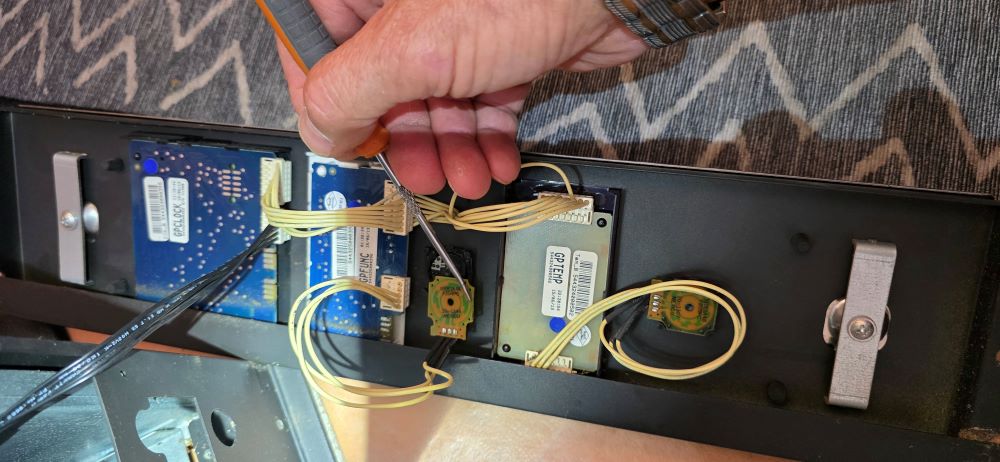
In a documented Blanco induction cooktop inspection in Merrimac, ISB Electrical found that a defective power-control board was not supplying the affected zone correctly.
Replacement of the board was recommended. The article records the fault diagnosis rather than a completed board replacement.
Because electronic power modules can be expensive, we consider spare parts availability and the overall condition of the appliance before recommending repair.
Read the Blanco Induction Cooktop Diagnosis – Merrimac
Induction Cooling Fan and Ventilation Problems
Induction power electronics generate heat during operation. Many appliances contain cooling fans and require ventilation through openings below the glass cooking surface.
If a cooktop shuts down after several minutes, possible causes include normal overheating protection, restricted airflow, a faulty cooling fan, temperature sensor failure or electronic damage.
The reported operating conditions, manufacturer requirements and cooling system should be checked before replacement parts are recommended.
Touch-Control Cooktop and Display Faults
Modern induction and ceramic cooktops often have touch-sensitive electronic controls. A control panel may stop responding because of surface moisture, activated child-lock settings, defective wiring connections or internal electronic failure.
If normal user checks do not restore operation, the electronic power supply, touch panel and related control circuits may require inspection.
Electric Cooking Appliance Problems After Power Interruptions
After a power interruption, some electronic ovens require their digital clocks or timers to be reset before heating functions operate.
Other cooking appliances may remain inoperative because of an electrical supply fault or defective internal components.
A power interruption alone does not prove that a surge damaged the appliance. The cause should be established through inspection and appropriate electrical testing.
Commercial Electric Oven Repairs for Beenleigh Businesses
Beenleigh's shops, food outlets, cafés and commercial premises may use electric ovens and suitable commercial cooking equipment.
Commercial electric appliances can have heavier-duty heating circuits, fan motors, temperature controllers, contactors and protective electrical devices.
Depending on the make and model, ISB Electrical can investigate electrical heating faults, defective controls, blower fan problems and appliances tripping circuit protection.
For additional commercial equipment services, see our Commercial Appliance Repairs Gold Coast page.
Commercial Pizza Oven Blower Motor Diagnosis
In a documented commercial pizza oven investigation in Oxenford, the appliance repeatedly tripped electrical power when operated.
ISB Electrical inspected the blower fan motor and its electrical circuit. Testing identified burnt motor windings and a short circuit.
Motor replacement was recommended, together with checking the affected electrical connections and testing the appliance before returning it to service.
This example shows why commercial oven power faults may be caused by fan motors or electrical controls rather than heating elements.
Read the Commercial Pizza Oven Investigation – Oxenford
Oven and Cooktop Repairs for Rental Properties
ISB Electrical assists owners and property managers with electric cooking appliance fault diagnosis in Beenleigh, subject to booking availability.
We can explain the identified fault, whether replacement components are available and whether the estimated repair cost is practical.
For appliances with unsafe wiring, uncontrolled heating or repeated electrical protection trips, further use should be avoided until the fault has been corrected and electrical testing completed.
Repair or Replace Your Electric Oven or Cooktop?
Replacing an oven heating element, thermostat, selector switch or ceramic simmerstat may be economical when the appliance is otherwise in good condition.
Replacing a built-in oven can require matching cabinetry dimensions, ventilation requirements and existing electrical connections. This can make an individual component repair worthwhile.
However, extensive wiring damage, multiple failures or expensive discontinued electronic modules may make complete replacement more practical.
We consider the appliance condition, confirmed fault, component availability and expected repair cost before discussing the options.
Electric Oven and Cooktop Brands We Repair
ISB Electrical works with electric cooking appliances from Westinghouse, Electrolux, Chef, Simpson, Bosch, Smeg, AEG, Fisher & Paykel, Omega, Blanco, Ilve, Beko, Technika, Euromaid, Ariston, Midea and other common manufacturers.
Repair suitability depends on the model, diagnosed fault and availability of suitable parts.
Real Oven and Cooktop Repair Stories from Our Service Area
These genuine repair articles describe oven and cooktop faults diagnosed by ISB Electrical in the named locations. They are provided as examples of technical experience, not as claims that those particular repairs were performed in Beenleigh.
Nearby Oven and Cooktop Repair Areas
ISB Electrical accepts enquiries for electric oven and cooktop repairs in Beenleigh and neighbouring areas including Yatala, Ormeau, Ormeau Hills, Willow Vale, Pimpama and Coomera. We also accept enquiries from Edens Landing, Eagleby and nearby communities, with visit arrangements subject to location and scheduling.
Need Oven or Cooktop Repairs in Beenleigh?
Contact ISB Electrical for professional diagnosis of electric ovens, ceramic cooktops, induction cooktops, freestanding stoves and suitable commercial electric cooking equipment. Please provide the appliance brand, model number, fault symptoms and complete service address.
Call 0422 993 777